Understanding Death Saves in D&D 5e (Updated for 2024 Rules)

Last updated: March 24th, 2025
What exactly are Death Saving Throws and how do they work? In this article, we’ll take a closer look at the 5e Death Saves rules to help you navigate this crucial aspect of the game.
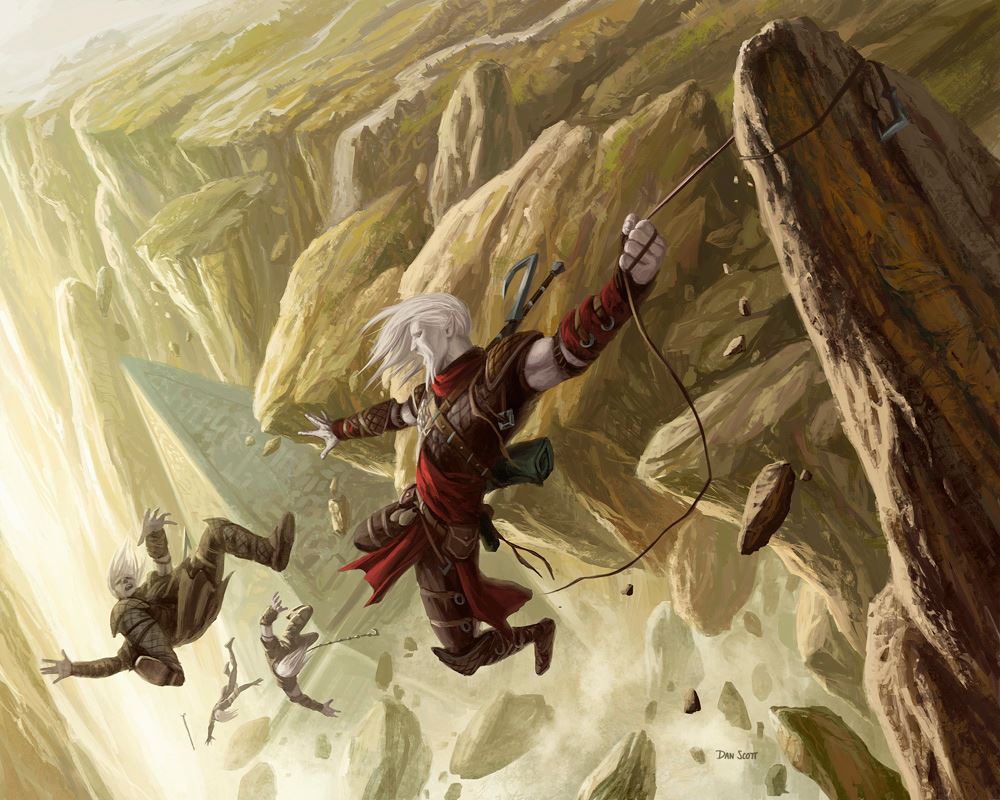
Dan Scott - Wizards of the Coast - Sudden Demise
Looking for the legacy version of this article based on the 2014 rules? Click here.
Table of Contents
Death Saves in the 2024 Rules
Death Saving Throws haven’t changed at all in the 2024 Core Rulebooks, but this article has been updated to reflect the new terminology and discuss new aspects introduced in the 2024 Player’s Handbook that affect Death Saving Throws.
What Are Death Saves in 5e?
Danger is a common occurrence in the world of Dungeons & Dragons. Whether it’s a dragon’s fiery breath, a deadly trap, or a fall from on-high, your character’s life is always on the line. When your character drops to 0 Hit Points, they immediately gain the Unconscious condition.
To determine if your character starts creeping closer to death, whenever you start your turn with 0 Hit Points, your character will make a Death Saving Throw. To do so, roll a d20. If the roll is 10 or higher, your character succeeds in making a Death Saving Throw. If the roll is 9 or lower, your character fails the saving throw.
Astute observers will notice that the probability of failing a Death Saving Throw is slightly lower than succeeding, 45% and 55%, respectively. Are the cards stacked against death in D&D? That remains to be seen.
Keep in mind that:
- This roll doesn’t apply any modifiers. Your fate is decided by the luck of the die.
- If your character fails three Death Saving Throws, they die.
But, if your character succeeds on three Death Saving Throws, they manage to hang on to life in a stable condition. You still have 0 Hit Points and the Unconscious condition, but you are Stable and no longer in danger of dying (unless someone is still trying to kill you, that is.)
Critical Successes and Critical Fails on Your Death Saves
Rolling a 20: If your character rolls a 20 on a Death Saving Throw, they regain 1 Hit Point, which removes the Unconscious condition. Seeing as you start your turn by making Death Saving Throws, this means you’ll pop back up with your action, Bonus Action, and movement at your disposal!
Rolling a 1: If your character rolls a 1 on a Death Saving Throw, they suffer two failures.
Taking Damage at 0 Hit Points
If some monster really wants you dead and attacks you while you’re down, it can speed you towards an early demise.
Taking any damage at 0 Hit Points makes you suffer an additional failure. But it gets worse. If you take damage from a Critical Hit, you instead suffer two failures instead.
“Well,” you might be thinking, “at least scoring a Critical Hit is a 1 in 20 chance.”
Unfortunately, thanks to your Unconscious condition, not only do attack rolls against you have Advantage, but any hit from an attacker within 5 feet of you is a Critical Hit.
So if the foe that downed you is hell-bent on finishing the job, has a Multiattack, and is within 5 feet of you, your odds don’t look too good if they get to attack again.
Instant Death
When you take damage and are reduced to 0 Hit Points, if there is still damage left over that equals your total Hit Points, you die immediately. No death saves.
Instant death can be the result of other effects, like dying due to the Disintegrate or Power Word Kill spells, or having your Strength reach 0 as a result of the Shadow’s Strength Drain attack. In this case, players skip Death Saving Throws and will need revival magic to continue to play their character.
Healing and Resetting Death Saving Throws

If a party member is at 0 Hit Points, it’s crucial to try and heal them as soon as possible. Whether you use a healing spell, Potion of Healing, class feature, or Healer’s Kit, gaining any Hit Points back removes the Unconscious condition and resets the Death Saving Throws count.
Healing Word is one of the best options for reviving downed teammates. It’s a ranged option, can be performed as a bonus action, and only costs a level 1 spell slot. Plus, in the 2024 Player’s Handbook, it heals for 2d4 + spellcasting modifier, rather than just 1d4. Even if your party member gets dropped again in the next round, they will have reset their Death Saves failures so an errant natural 1 won’t kill them.
Stabilizing at 0 Hit Points
If you become Stable while rolling Death Saving Throws, you’re still Unconscious at 0 Hit Points, but you are no longer slipping toward your demise.
There are a number of ways to Stabilize when making Death Saving Throws:
- Roll 3 successes on your Death Saving Throws
- Have an ally use the Help action to make a DC 10 Wisdom (Medicine) check, stabilizing you on a success.
- Have an ally cast Spare the Dying on you.
- Have an ally with a Healer’s Kit take the Utilize action to expend one of the kit’s uses. They don’t have to make a Medicine check.
If your character has stabilized but remains unconscious, they will regain 1 hit point after 1 hour, which removes the Unconscious condition.
The Best Ways to Cheat Death

Death saves are mechanically a saving throw, even if they aren’t tied to an ability score. That said, any ability that can affect saving throws, like the Bless spell or the Lucky feat can apply when making them.
Halflings are one of the biggest benefactors of this because their Luck trait allows them to reroll a 1 on a D20 Test. They must take the new roll, however, so rolling back-to-back 1s can still be an issue (even if it’s just a 0.25% chance liklihood).
The Durable feat in the 2024 Player’s Handbook also now provides Advantage on Death Saving Throws, as does the Beacon of Hope spell.
Do All Creatures Make Death Saves in 5e?
Most of the time, monsters and other NPCs die when they reach 0 Hit Points. For a particularly powerful monster or important NPC, DMs can make them fall Unconscious and roll Death Saves when they are reduced to 0 Hit Points.
Death Is Not The End, But This Is
Death Saving Throws are an unfortunate but crucial aspect of D&D 5e. Understanding the rules of Death Saves and how they work in combat can mean the difference between life and death for your character. Hopefully, now that you’ve learned how dangerous getting into Death Saving Throws is, you’ll do your best to avoid them. But, adventuring is a dangerous profession, so good luck with that.
Related Posts

Wasted Wizard Product Spotlight: Stackable DnD Condition Rings
We brought Wasted Wizard’s stackable condition rings to our weekly D&D game to see how well they streamlined combat. Here’s our full review!
Friday November 21, 2025
EBONWOOD Product Spotlight: Tidal Focus Dice Set and D&D Accessories
EBONWOOD sent over a few of their latest tabletop accessories for us to try out—here’s how they held up in a real D&D session.
Wednesday August 6, 2025

Essentials for Airships in D&D
Take to the skies! Discover airship history, mechanics, and free battlemaps to bring high-flying adventures to your D&D campaign.
Tuesday May 27, 2025
The Book of Dragons: A New Book on Dragon Lore is Coming Summer 2025
Discover The Book of Dragons, a stunning D&D lore book packed with dragon art, anatomy, and myth coming August 2025.
Friday May 23, 2025
Or follow us on Instagram, Twitter, and YouTube.