Dual Wielder 5e (Updated for the 2024 Rules)

Last updated: June 10th, 2025
Wield two weapons with style using the new Dual Wielder feat in D&D 5e! The 2024 update tightens the rules and rewards swift, stylish play.
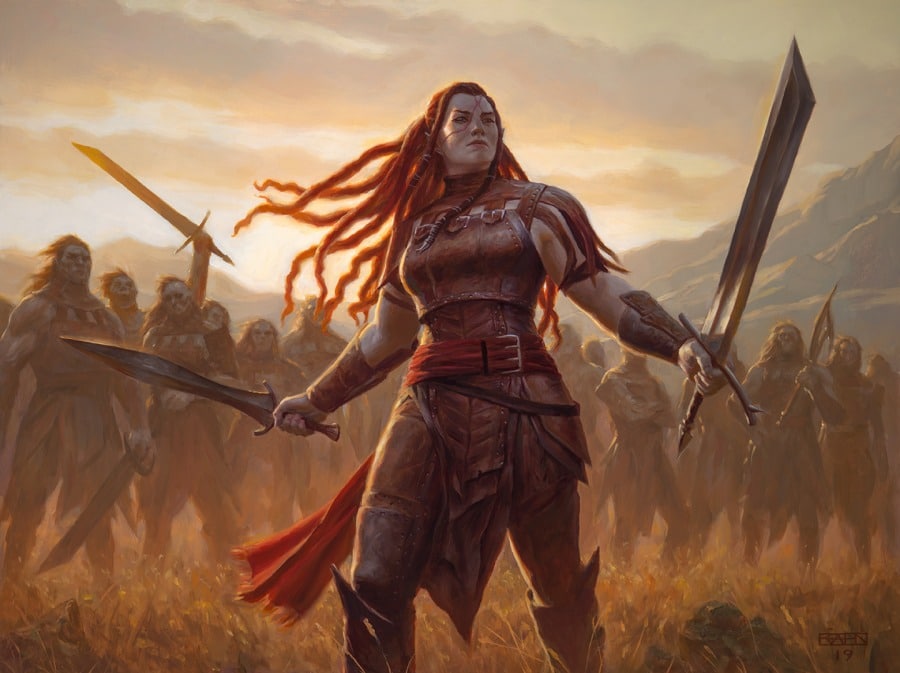
Chris Rahn - Wizards of the Coast - Radha, Heart of Keld
Looking for the legacy version of this article based on the 2014 rules? Click here.
What Is the Dual Wielder Feat in 5e?
The Dual Wielder feat is an interesting choice for any character looking to increase their offensive capabilities in combat. This feat gives bonuses to characters who are wielding two weapons at the same time, providing more defensive capabilities and allowing more weapons to be considered in your loadout.
While still a niche martial feat, it now provides more clarity and balance thanks to a restructured Bonus Action mechanic and a baked-in Ability Score Increase.
What’s Changed Since 2014?
The 2014 version of Dual Wielder let you use two non-Light weapons together, gave a +1 AC bonus, and let you draw/stow two one-handed weapons at once. The 2024 revision ditches the AC bonus and the non-Light weapon clause, replacing them with a clearer Bonus Action attack mechanic and an ASI—more in line with modern feat formatting.
These changes tighten the feat’s interaction with base rules and encourage you to stick with Light weapons for the Action while giving a bit of flexibility for the offhand. It’s less “break the rules” and more “play within the lines effectively.”
How Does Dual Wielder Work?
Here’s what it does now:
- Ability Score Increase: +1 to Strength or Dexterity (up to a max of 20).
- Enhanced Dual Wielding: When you take the Attack action with a Light weapon, you can make one extra attack as a Bonus Action with a different Melee weapon (must not be Two-Handed). You don’t add your modifier to the Bonus Action damage unless it’s negative.
- Quick Draw: You can draw or stow two one-handed weapons when you would normally only be able to draw/stow one.
How to Get the Dual Wielder Feat
The Dual Wielder feat is available to all classes at level 4 and beyond whenever they can select a feat, as long as they have a Dexterity or Strength score of 13 or higher.
Is Dual Wielder Good?
In our 5e Feats Tier List, Dual Wielder was given a B Tier rating, making it a niche feat that can improve some builds in D&D 5e.
If you’re a martial class that leans into the Two-Weapon Fighting style, this feat offers quality-of-life improvements: a small ASI bump, flexibility with your offhand, and faster weapon swaps. That said, you’re still relying on multiple hits for decent damage, and without Extra Attack (or something like Hunter’s Mark), the payoff isn’t as explosive as other options.
What Are the Best Weapons for Dual Wielding?
In the 2024 ruleset, Dual Wielder gives you more flexibility by allowing you to wield a second Melee weapon that lacks the Two-Handed property—even if it’s not Light. But here’s the trick: you still want to stick with Light weapons in both hands if you’re trying to maximize your number of attacks per turn.
That’s because the Light property itself gives you a Bonus Action attack when you take the Attack action and use a Light weapon. If one of those Light weapons also has the Nick Weapon Mastery, you can shift that extra attack from a Bonus Action into your Attack action. Combine that with Dual Wielder’s built-in Bonus Action attack, and you’ve got a path to three attacks in one turn:
- Attack 1: Light weapon in main hand (triggers Light property)
- Attack 2: Light weapon with the Nick property (made during the Attack action)
- Attack 3: Bonus Action attack from Dual Wielder, using any Melee weapon that’s not Two-Handed
To pull this off, your first two attacks must be made with Light weapons (to satisfy the Light and Nick property requirements), and your Bonus Action attack from Dual Wielder can then be either weapon.
What Makes Nick So Good?
The Nick mastery is the linchpin of this build. It lets you make the Light property’s extra attack as part of your Attack action instead of using your Bonus Action. This frees up your Bonus Action for the third strike granted by Dual Wielder. If you’re a class that uses Bonus Actions for other abilities—like a Rogue’s Cunning Action or a Ranger’s Hunter’s Mark—Nick gives you that action economy flexibility while still letting you output solid damage turn after turn.
Top Dual-Wielding Nick Weapons
If you’re going to be dual-wielding Light weapons, chances are you’re building around Dexterity. This means you’ll want to prioritize weapons with the Finesse property and the Nick mastery when possible.
- Scimitar (1d6 Slashing, Finesse, Light, Nick) – The gold standard for Dex-based dual wielders. Light, Finesse, and Nick all in one sleek curve of steel. Great as your main or Nick-hand weapon.
- Dagger (1d4 Piercing, Finesse, Light, Thrown, Nick) – Lower damage, but extremely versatile. Works at range, fits Dex builds, and lets you Nick from range if needed.
- Light Hammer (1d4 Bludgeoning, Light, Thrown, Nick) – No Finesse, but great for Strength-based builds or hybrid throw-and-smack tactics.
- Sickle (1d4 Slashing, Light, Nick) – Another Nick option for Strength builds, but underwhelming damage output limits its appeal.
- Club (1d4 Bludgeoning, Light, Slow) – Just don’t. You deserve better.

Club
Light: You can make a Bonus Action attack with another Light weapon.
Slow: On a hit, reduce the target’s Speed by 10 feet until your next turn.

Dagger
Finesse: Use Strength or Dexterity for attack and damage rolls (your choice).
Light: You can make a Bonus Action attack with another Light weapon.
Nick: You can make the extra attack from the Light property as part of the Attack action.
Thrown: You can throw this weapon to make a ranged attack using your melee ability modifier.

Light Hammer
Light: You can make a Bonus Action attack with another Light weapon.
Nick: You can make the extra attack from the Light property as part of the Attack action.
Thrown: You can throw this weapon to make a ranged attack using your melee ability modifier.

Scimitar
Finesse: Use Strength or Dexterity for attack and damage rolls (your choice).
Light: You can make a Bonus Action attack with another Light weapon.
Nick: You can make the extra attack from the Light property as part of the Attack action.

Sickle
Light: You can make a Bonus Action attack with another Light weapon.
Nick: You can make the extra attack from the Light property as part of the Attack action.
Recommended Pairings
If you want to max out your attacks per turn:
- Shortsword + Scimitar – Swing with your Shortsword and apply the Vex mastery property, then swing using the Scimitar’s Nick property. Follow up with a Bonus Action Shortsword attack for more Vex.
- Shortsword + Dagger – Slightly lower damage, but great if you want a backup ranged option.
Keep in mind: you can only trigger Nick once per turn, and only when you’re using a Light weapon as part of your Attack action. But that still leaves room for a third hit using the Bonus Action from Dual Wielder, provided your setup meets the feat’s requirements.
Boosting Your Dual-Wielding Damage
Dual Wielder builds are excellent for classes and subclasses that add extra damage to their weapon attacks. Since you can potentially land three attacks per turn using the combination of Light weapons, the Nick mastery, and Dual Wielder’s Bonus Action clause, each of those attacks becomes a vehicle for bonus damage effects. Here are some top-tier ways to amplify that output:
- Barbarian’s Rage: While raging, Barbarians add bonus damage to every melee weapon attack that uses Strength. This bonus scales with level (starting at +2, up to +4), and applies to all three of your attacks—making dual wielding interesting for Strength-based Barbarians.
- Ranger’s Hunter’s Mark: A staple damage booster. While the spell is active, you deal an extra 1d6 damage whenever you hit the marked creature with a weapon attack. If you hit three times per turn, that’s potentially 3d6 extra damage every round—fantastic value for a level 1 spell slot.
- Two-Weapon Fighting Style: Normally, offhand attacks (those made with your Bonus Action) don’t add your ability modifier to the damage. This Fighting Style changes that, letting you add your Strength or Dexterity mod to those attacks. This is especially helpful for Dual Wielder users, as it boosts the damage of your third strike and makes your Bonus Action weapon feel more impactful.
- Warlock’s Hex: Similar to Hunter’s Mark, this spell lets you deal an extra 1d6 necrotic damage whenever you hit the hexed target with a weapon attack. Hex works great for Pact of the Blade Warlocks who want to go all-in on a dual-wielding build, especially when paired with Eldritch Smite or other melee-focused Invocations.
This playstyle can also help classes with burst damage, like the Rogue’s Sneak Attack or Paladin’s Divine Smite. Seeing as Rogues only ever get one attack per round, if they miss, they’re missing out on a huge amount of damage. Gaining up to two extra attacks allows your to close the margin of error when it comes to landing your Sneak Attacks.
Related Feats

Elemental Adept Guide 5e
Elemental Adept allows builds that focus on a particular element to moderately increase their viability. Is Elemental Adept right for your build? Find out…
Thursday June 12, 2025

Durable Guide 5e
Big muscles are appealing, but is the Durable feat really worth it?
Tuesday June 10, 2025

Defensive Duelist Guide 5e
Dodge sword strikes like a swashbuckling pro with the Defensive Duelist feat in D&D 5e! This Dexterity-based feat boosts your AC with a Finesse…
Wednesday May 21, 2025
Crusher Guide 5e
The Crusher feat can provide a significant power boost to martial builds that rely on bludgeoning damage. How well will it work for your…
Tuesday May 20, 2025
Or follow us on Instagram, Twitter, and YouTube.