Crusher 5e (Updated for the 2024 Rules)

Published on: May 20, 2025
The Crusher feat can provide a significant power boost to martial builds that rely on bludgeoning damage. How well will it work for your build? Find out here.
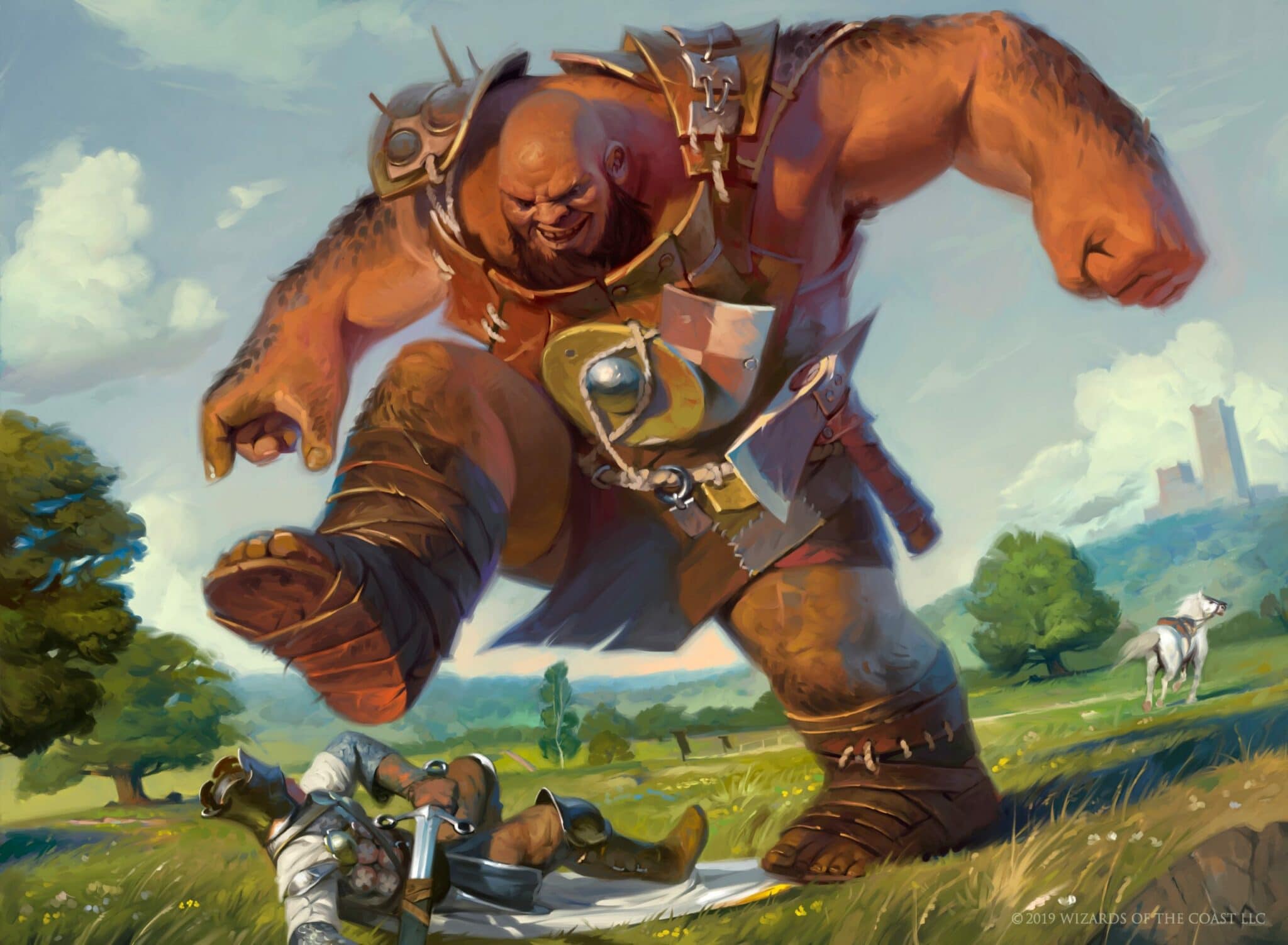
Victor Adame Minguez - Wizards of the Coast - Bonecrusher Giant
What Is the Crusher Feat in 5e?
Crusher is one of the three martial-focused feats we got in 2024 Player’s Handbook, alongside Slasher and Piercer. These feats offer martial classes an additional bonus for sticking to a specific damage type and also provide an increase to prevalent ability scores.
How Does Crusher Work?
If you grab this feat, you’ll end up with three new benefits:
- Ability Score Increase. You can increase your Strength or Constitution by one, up to a maximum of 20. Boosts your attack roll’s chance to hit and damage or increases your survivability.
- Push. Once per turn, when you hit a creature with an attack that dealt Bludgeoning damage, you may move it five feet into an unoccupied place, as long as the creature is no more than one size category larger than you. Good for pushing targets into hazards or strategically repositioning them.
- Enhanced Critical. Whenever you score a Critical Hit that deals Bludgeoning damage to a creature, any attack rolls made against that creature have Advantage until the start of your next turn. Unfortunately, if your crit finishes off your target, this ability is a big ol’ whiff.
How to Get the Crusher Feat
The Crusher feat is available to all classes at level 4 and beyond whenever they can select a feat.
Is Crusher Good?
In our 5e Feats Tier List, Crusher was given a B Tier rating, making it a niche feat that can improve some builds in D&D 5e.
Crusher is a somewhat situational General feat. The only build that really wants this feat is a melee build (preferably Champion Fighter, for the added Critical Hit potential) with a Bludgeoning weapon. If this fits your build, being able to +1 your Strength or Constitution while getting the bonus from crits is going to provide a lot of value for your party.
Crusher and Weapon Mastery
Weapon Mastery is a mechanic introduced in the 2024 Player’s Handbook. This feature adds effects to weapons that apply when making attacks. There is a Weapon Mastery property called “Push,” which does the same thing as the Push benefit of the Crusher feat, only it’s not necessarily limited to weapons that deal Bludgeoning damage and pushes creatures 10 feet instead of 5 feet..
Combining the Crusher Feat with the Push Mastery Property
If you’re looking to create a battlefield manipulation build, combining these two properties is quite strong, especially because neither has the opportunity to be suppressed by a saving throw. As long as you hit, you can push the creature you’re targeting.
It’s worth noting that this is not RAW, a DM could adjudicate that you could use either property on a hit, not both. But, I see a certain case that you can push a creature 15 feet straight away from you on hit, seeing as Crusher allows you to move the creature 5 feet to any unoccupied space, but the Push mastery property only allows you to move them in a straight line.
The best weapon for this type of playstyle is the Warhammer as it deal more damage than the Greatclub. You could even throw in Shield Master to allow you to push creatures as a Reaction after you get hit.
I would also recommend finding a way to pick up Booming Blade, as this will ensure the targeted creature can’t just dust itself off and charge back at you without taking some extra damage.
The Best Weapons for the Crusher feat
Here are the weapons in D&D that deal Bludgeoning damage:
| Name | Damage | Properties | Mastery | Weight | Cost |
|---|---|---|---|---|---|
| Club | 1d4 Bludgeoning | Light | Slow | 2 lb. | 1 SP |
| Greatclub | 1d8 Bludgeoning | Two-Handed | Push | 10 lb. | 2 SP |
| Light Hammer | 1d4 Bludgeoning | Light, Thrown (Range 20/60) | Nick | 2 lb. | 2 GP |
| Mace | 1d6 Bludgeoning | — | Sap | 4 lb. | 5 GP |
| Quarterstaff | 1d6 Bludgeoning | Versatile (1d8) | Topple | 4 lb. | 2 SP |
| Sling | 1d4 Bludgeoning | Ammunition (Range 30/120; Bullet) | Slow | — | 1 SP |
| Flail | 1d8 Bludgeoning | — | Sap | 2 lb. | 10 GP |
| Maul | 2d6 Bludgeoning | Heavy, Two-Handed | Topple | 10 lb. | 10 GP |
| Warhammer | 1d8 Bludgeoning | Versatile (1d10) | Push | 5 lb. | 15 GP |
It’s also worth noting that Unarmed Strikes and any spells that deal Bludgeoning damage (like Bigby’s Hand) also proc the effects of this feat.
Of these options, the best weapons for this feat are as follows:
- Maul: The most damage, has the Topple mastery property, and is Heavy to combine with Great Weapon Master.
- Warhammer: Versatile and has the Push mastery property with can combo with Crusher’s ability to push targets.
- Quarterstaff: Works with Shillelagh to allow your Druid or Ranger to become a magical Quarterstaff-wielding melee combatant.
Related Feats

Elemental Adept Guide 5e
Elemental Adept allows builds that focus on a particular element to moderately increase their viability. Is Elemental Adept right for your build? Find out…
Thursday June 12, 2025

Durable Guide 5e
Big muscles are appealing, but is the Durable feat really worth it?
Tuesday June 10, 2025
Dual Wielder Guide 5e
Wield two weapons with style using the new Dual Wielder feat in D&D 5e! The 2024 update tightens the rules and rewards swift, stylish…
Monday June 9, 2025

Defensive Duelist Guide 5e
Dodge sword strikes like a swashbuckling pro with the Defensive Duelist feat in D&D 5e! This Dexterity-based feat boosts your AC with a Finesse…
Wednesday May 21, 2025
Crusher FAQs
What's the best weapon to use with Crusher?
Different weapons will shine in different scenarios. The maul is the go-to choice for great weapon builds because it deals 2d6 and has the heavy property, the quarterstaff can work with Polearm Master and doesn't require proficiency with martial weapons, the warhammer offers versatility between 1d8 and 1d10 depending on how you wield it, and even the sling can be used for ranged builds.
Conclusion
All three of these damage feats from Tasha’s Cauldron of Everything offer martial classes something new and different. These new damage-type feats expand on what a regular melee class can do without expending any bonus actions. Crusher is by far the best of them, though it is the one that has the least amount of support behind it, as bludgeoning isn’t as common.
How do you feel about Crusher? Do you think it works for any particular class we didn’t mention? Let us know in the comments below!
Or follow us on Instagram, Twitter, and YouTube.