Tavern Brawler 5e (Updated for the 2024 Rules)

Last updated: February 16th, 2025
Crush your drink and grab a chair, it’s time for a bar fight!
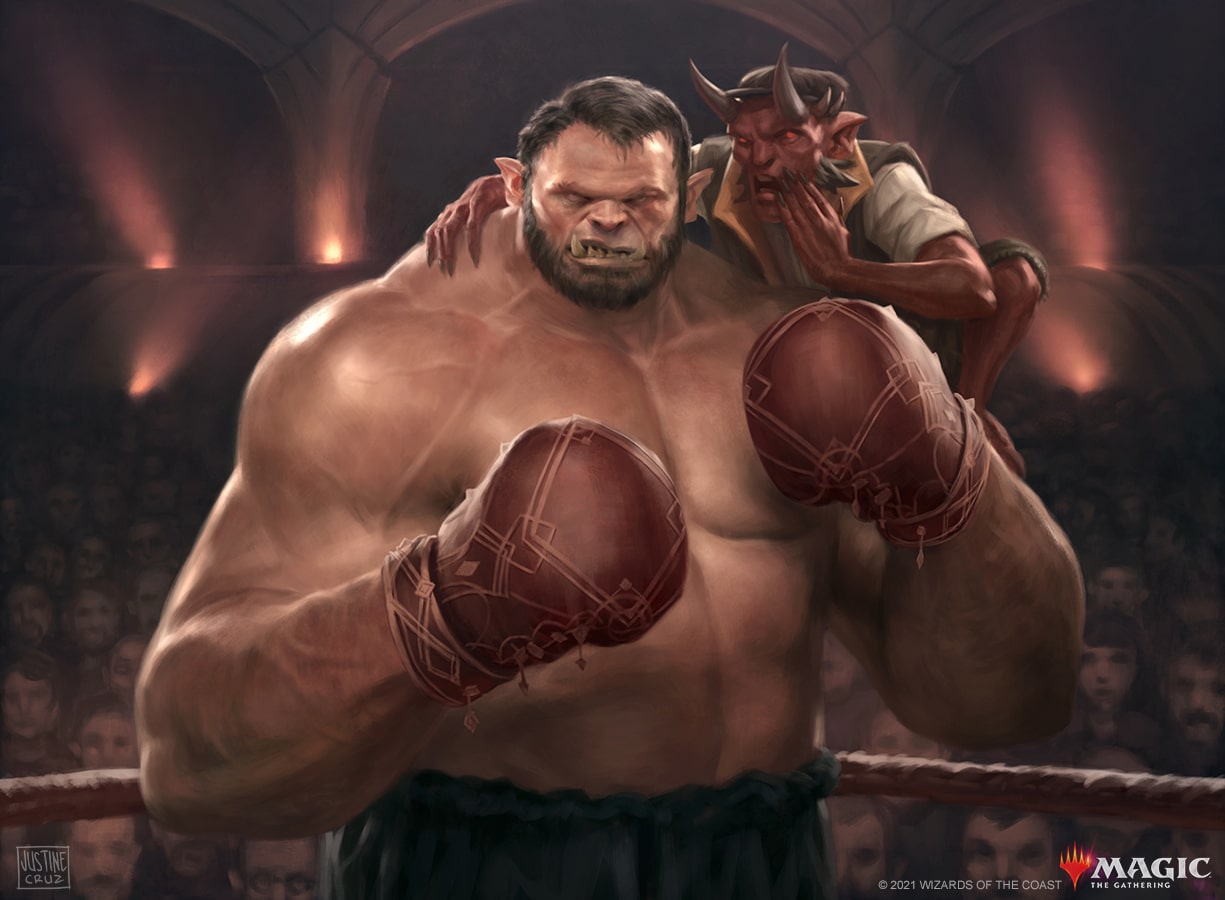
Justine Cruz - Wizards of the Coast - Pugnacious Pugilist
Looking for the legacy version of this article based on the 2014 rules? Click here.
What Is the Tavern Brawler Feat in 5e?
If you’ve ever wanted to turn your environment into a weapon, the Tavern Brawler Origin feat might be your perfect match. This feat combines unarmed combat with improvisation, letting you turn almost anything—bar stools, tankards, or even a rock—into a formidable tool of destruction. It’s a fantastic option for characters who want to bring a gritty, unpredictable edge to their combat style.
The 2024 Player’s Handbook has introduced a fresh take on Tavern Brawler, incorporating some new mechanics with practical combat benefits. Whether you’re roleplaying a rowdy brawler or an opportunistic Fighter, this feat delivers on all fronts.
How Does Tavern Brawler Work?
The Tavern Brawler feat has been updated as an Origin feat in the 2024 Player’s Handbook, meaning you can gain it for free when choosing certain backgrounds. When you pick up the Tavern Brawler Origin feat, you gain the following benefits:
- Enhanced Unarmed Strike: Your Unarmed Strikes deal 1d4 Bludgeoning damage plus your Strength modifier instead of the normal damage. This only improves Unarmed Strike’s damage by an average of 1.5, so it’s not a huge gain.
- Damage Rerolls: When you roll a 1 on a damage die for your Unarmed Strikes, you can reroll the die and must use the new roll. Again, not a huge increase in damage, especially not enough to forgo a real weapon for Unarmed Strikes.
- Improvised Weaponry: You gain proficiency with improvised weapons, which isn’t particularly important to any builds.
- Push: Once per turn, when you hit a creature with an Unarmed Strike, you can deal damage and Shove the target 5 feet away from you. This is easily the most interesting benefit of this feat, though it’s made irrelevant by the Shove mastery property introduced in the 2024 Player’s Handbook.
How to Get the Tavern Brawler Feat
You can pick up the Tavern Brawler feat by choosing the Sailor background, or whenever you gain the ability to choose a feat, like at level 4.
Is Tavern Brawler Good?
We gave Tavern Brawler a C Tier rating In our 5e Feats Tier List, making it a below-average feat in D&D 5e.
This feat changes your Unarmed Strikes damage into a d4 + Strength and gives you proficiency with improvised weapons, just like the 2014 iteration. But, unlike this previous version, you get a slight boost because you can reroll 1s on your Unarmed Strikes damage dice.
It also allows you to use the Push option as well as deal damage when you hit with an Unarmed Strike once per turn. This replaces your ability to Grapple as a Bonus Action after you hit with an Unarmed Strike. Sad news for Grapple builds, but it can be more effective when controlling the battlefield.
This is less appealing for Monks, and other martial classes can gain access to the Push mastery property, so it’s not a particularly impressive feat.
Tavern Brawler 5e Interactions
Critting With Unarmed Strikes
Thanks to this feat, you can now score a Critical Hit on your Unarmed Strikes, outputting a whopping 2d4 + Strength damage.
Monks/Unarmed Fighting and Grappler
Though they likely would never take this feat, Monks or Fighters that take Unarmed Fighting don’t need to worry about the 1d4 overriding their higher Unarmed Strike damage dice. These abilities can take precedent over the benefit granted by Tavern Brawler if you choose (which you should).
That said, Monks may enjoy the ability to Shove and Damage simultaneously with their Unarmed Strikes because they don’t have access to Weapon Mastery, so this feat may still be worth it for non-weapon builds.
Related Feats

Elemental Adept Guide 5e
Elemental Adept allows builds that focus on a particular element to moderately increase their viability. Is Elemental Adept right for your build? Find out…
Thursday June 12, 2025

Durable Guide 5e
Big muscles are appealing, but is the Durable feat really worth it?
Tuesday June 10, 2025
Dual Wielder Guide 5e
Wield two weapons with style using the new Dual Wielder feat in D&D 5e! The 2024 update tightens the rules and rewards swift, stylish…
Monday June 9, 2025

Defensive Duelist Guide 5e
Dodge sword strikes like a swashbuckling pro with the Defensive Duelist feat in D&D 5e! This Dexterity-based feat boosts your AC with a Finesse…
Wednesday May 21, 2025
Or follow us on Instagram, Twitter, and YouTube.